
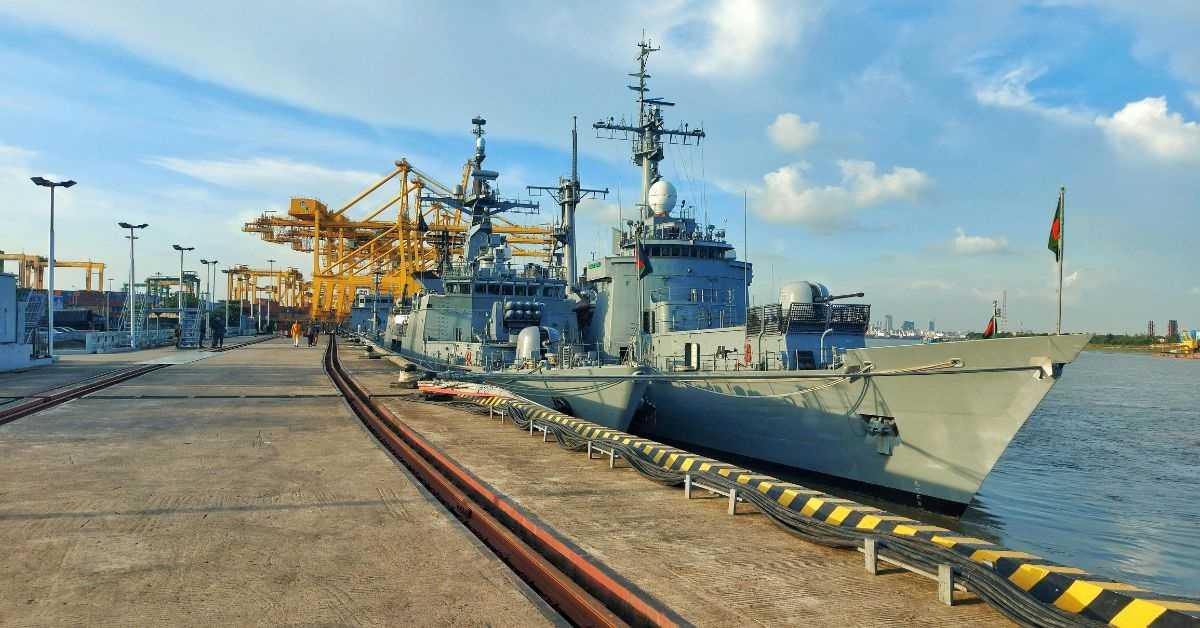
In a move reminiscent of the pre-World War II industrial buildup, the Trump administration has announced a historic $1.5 trillion defense budget request for fiscal year 2027, signaling a fundamental shift in American maritime strategy and global deterrence. The proposal, which represents a nearly 40% increase over the previous year’s funding, seeks to establish a “Golden Fleet” centered on the first new class of American battleships in over eight decades.
A Modern Leviathan: The Trump-Class Battleship
The centerpiece of this naval renaissance is the Trump-class guided-missile battleship (BBG-X), with the lead ship designated the USS Defiant (BBG-1). Displacing between 30,000 and 40,000 tons, these vessels are designed to be three times the size of current Arleigh Burke-class destroyers.
Naval leadership argues the “capital ship” is a necessity due to the physical and power-generation limits of existing hulls. The Defiant is slated to carry an unprecedented arsenal, including 12 Conventional Prompt Strike (CPS) hypersonic missile cells, a 32-megajoule electromagnetic railgun, and high-energy laser suites ranging from 300 to 600 kW for layered defense against drone swarms. While some analysts describe the design as more akin to a “battlecruiser” than a traditional battleship, proponents argue its massive deck space and electrical capacity make it the ultimate command-and-control node for a hybrid fleet of manned and unmanned systems.
The ‘Golden Dome’ and the Space Frontier
Beyond the seas, the budget fully funds the “Golden Dome,” a multi-layered missile defense initiative estimated to cost up to 185billion. The FY2027 request allocates 17.5 billion to this project, prioritizing space-based sensors (7.2 billion) and military satellites (3.6 billion) capable of tracking hypersonic glide vehicles from orbit.
This technological surge is driving a “Defense Mega-Trend” on Wall Street, with the defense sector (ITA ETF) already returning over 38% year-to-date in 2026. Primes like Lockheed Martin and RTX Corporation are reporting record backlogs of 194 billion and 268 billion respectively, driven by massive restocking orders for munitions depleted by years of support for foreign contingencies.

Industrial Rebirth: The ‘Make American Shipbuilding Great Again’ Initiative
To achieve the goal of 41 new ships, the administration has pivoted toward a “whole-of-nation” industrial strategy, fostering a critical alliance with South Korea’s Hanwha Group. The acquisition of the Philadelphia Shipyard by Hanwha has become the cornerstone of this efforts. Funded by a $5 billion investment, the yard is being transformed with “Lego-style” modular construction techniques and robotic assembly, aiming to boost output from one ship per year to twenty.
This partnership is viewed as essential to overcoming the skilled labor shortages and manufacturing bottlenecks that have plagued the domestic industrial base for decades. “Fiscal futility is ending,” stated White House budget director Russell Vought, noting that the maritime demand signal is the largest since the administration of Franklin D. Roosevelt.
Fiscal Architecture and Regional Conflict
The 1.5 trillion top line is supported by a controversial “Reconciliation2.0” strategy. By seeking 350 billion through a budget reconciliation bill, the administration intends to bypass traditional “parity” negotiations that require matching increases in non-defense spending. Instead, the budget proposes a 10% ($73 billion) reduction in domestic discretionary programs, including sharp cuts to the Departments of Agriculture, Education, and the EPA.
The urgency of this buildup is underscored by the ongoing Operation Epic Fury against the Iranian regime. Launched in February 2026, the conflict has strained U.S. munitions depth and highlighted vulnerabilities in current fleet sustainment. The FY2027 budget responds by prioritizing the rapid procurement of 12 “critical munitions” and reversing prior reductions to the Military Health System to restore combat medical readiness.
The Strategic Gamble
While Republican leaders praise the budget as a necessary step toward spending 5% of GDP on defense, Democratic critics have labeled the proposal “bloated” and “undisciplined,” arguing it prioritizes “vanity projects” over essential social services.
As the Navy moves at “wartime speed” to break ground on new facilities, the success of the Golden Fleet remains contingent on several high-risk factors: the effective implementation of South Korean modular techniques, the stabilization of the global economy amidst active war, and the political durability of the reconciliation funding. For now, Washington has placed a $1.5 trillion bet that industrial mass and technological superiority remain the only credible paths to “peace through strength” in an increasingly contested world.