
When people hear about international freight costs, most of them think it is one clear price.
You book a shipment, pay the amount, and your goods move from one country to another.
But international shipping does not work like that.
In real life, shipping goods across countries includes many small charges. These charges do not come all at once. They appear slowly, at different stages of the journey. Many people do not know about them until they see the final bill. That is when confusion and stress begin.
In this blog, we walk you through the hidden charges involved in international shipping, explaining each one in a clear and easy-to-follow way.
Why International Shipping Has Many Extra Costs
International shipping is not just about moving goods from one place to another.
Your goods:
- Leave your factory or warehouse
- Travel to a port
- Get loaded on a ship or plane
- Travel to another country
- Get checked by customs
- Get delivered to the buyer
Each step needs people, machines, fuel, and time. All of this costs money.
Most people only hear about the main shipping cost at the start. But the other costs appear later. This is why international shipping often feels expensive and confusing.
Freight Cost Is Not the Final Cost
This is the most important thing to understand.
- Freight cost is the basic charge to move goods
- Final shipping cost includes freight cost plus all other charges
Many people assume freight cost represents the total expense, but that is not the case.
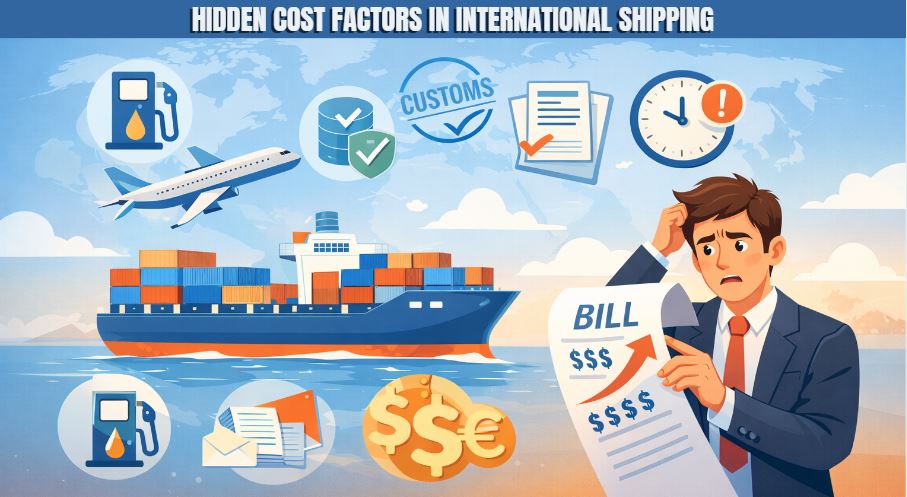
Fuel surcharges, customs duties, paperwork fees, and port charges steadily drive up international freight costs when businesses fail to plan ahead.
Fuel Charges That Keep Changing
Ships, planes, and trucks all run on fuel.
Fuel prices change very often. When fuel prices go up, shipping companies add fuel charges to your bill.
Fuel charges:
- Are not fixed
- Change monthly or weekly
- Are added after the base price
Even if your shipment details stay the same, fuel charges can increase your total cost. Because fuel prices depend on global markets, weather, and supply issues, they are not in anyone’s full control. This is why fuel charges can increase without much warning.
A shipment that cost one amount last month may cost more this month, even if nothing about the shipment has changed.
Understanding this helps you see why your final shipping bill may look different from the first quote.

Customs Duty and Government Taxes
When goods enter another country, the government checks them.
You may need to pay:
- Import duty
- GST or VAT
- Other local taxes
These charges depend on:
- Type of goods
- Value of goods
- Destination country rules
Customs duty is one of the biggest reasons international freight costs rise suddenly.
Port Charges at Both Ends
Ports are busy working areas. Goods are moved, lifted, and stored there.
Ports charge money for:
- Loading containers
- Unloading containers
- Using cranes
- Moving goods inside the port
These charges apply at:
- Starting port
- Destination port
Even though each charge looks small, together they form a big amount.
Paperwork and Document Costs
International shipping needs many documents.
Common documents include:
- Bill of Lading
- Commercial invoice
- Packing list
- Certificate of origin
Preparing and checking these papers takes time and effort. Freight agents charge service fees for this work.
If documents are wrong:
- Goods can be delayed
- Extra storage charges apply
- Corrections cost money
Good paperwork saves both time and cost.
Insurance: Small Cost, Big Safety
Insurance is optional. Many people skip it to save money.
But shipping is not risk-free.
Problems can happen:
- Goods may break
- Goods may get lost
- Weather may damage cargo
Without insurance, you pay the full loss.
With insurance, you stay protected.
Insurance is a small cost compared to the loss it can prevent.
Storage, Demurrage, and Delay Charges
Ports allow free storage only for a short time.
If your goods stay longer, extra charges apply.
These charges are called:
- Demurrage – container stays too long at port
- Detention – container returned late
Delays happen due to:
- Customs checking
- Missing documents
- Late payments
Every extra day adds cost to your shipping bill.
Currency Exchange and Bank Fees
International shipping often involves foreign currency payments.
Extra charges include:
- Currency conversion fees
- Bank transfer charges
- Exchange rate changes
Even a small change in currency value can affect the final amount, especially for large shipments. These charges usually come from banks, not shipping companies.
They are often noticed only when the payment is made or received.
Because of this, the final amount paid can be slightly higher than what was first expected.

Packaging and Weight Problems
Shipping cost depends on:
- Weight
- Size
Bad packaging:
- Takes more space
- Increases volume weight
- Raises shipping cost
Good packaging:
- Saves space
- Protects goods
- Reduces cost
Smart packaging helps control international freight costs.
Final Takeaway
International shipping is not expensive without reason. It is expensive because many small costs work together behind the scenes.
When you understand these hidden costs, you can plan better, avoid surprises, and protect your budget.
Working with an experienced logistics partner like Lading Logistics makes international shipping easier. They explain costs clearly, manage documents properly, and help move goods smoothly without last-minute shocks.
To avoid unexpected costs, it’s important to understand the difference between freight charges and transportation charges in global shipping.
FAQs
1. Why do international freight costs change so often?
Fuel prices, currency rates, and port conditions keep changing.
2. Are customs duties included in freight charges?
Usually no. Customs duties and taxes are charged separately.
3. What hidden cost surprises people the most?
Storage, demurrage, and delay charges.
4. Is insurance really needed for shipping?
Yes. It protects your goods from damage and loss.
5. How can I reduce shipping costs?
Plan early, prepare correct documents, pack goods properly, and work with a reliable logistics partner.