
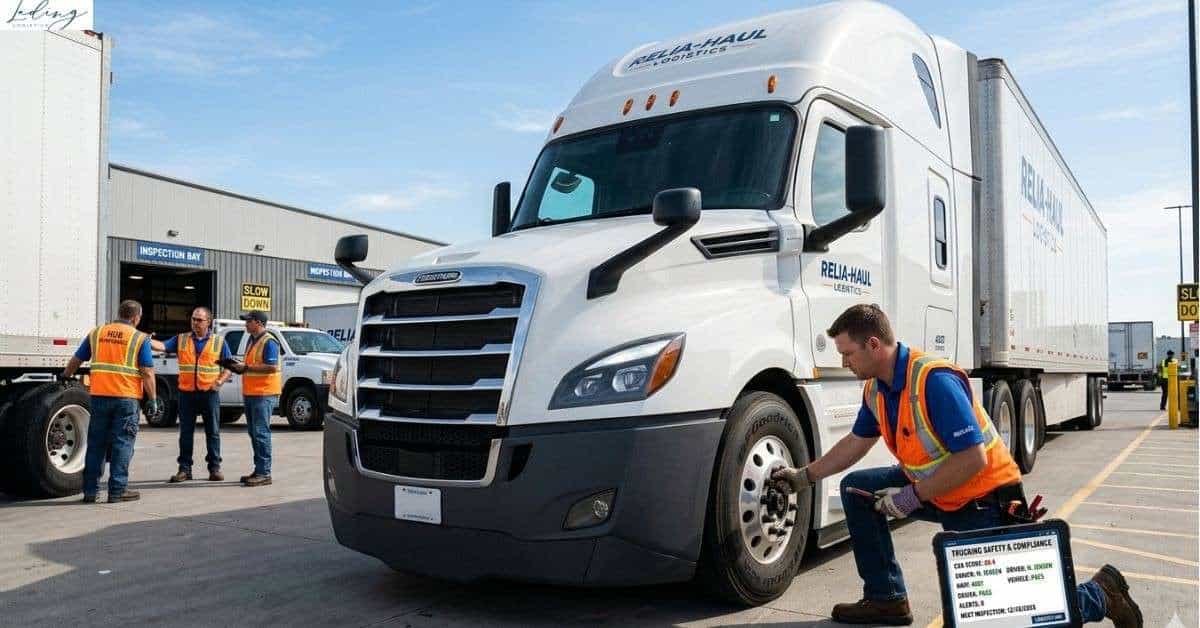
Even a small problem in trucking can cause more major problems than you thought. A burnt-out taillight might result in fines, delays, or additional costs. That’s why it’s so important to check the truck before you leave.
The problem is, not every driver spends enough time on these checks. Some inspections are done in seconds, which means important issues can easily be missed.
To improve safety, the Federal Motor Carrier Safety Administration uses CSA scores. These scores are basically a way to track how safely a trucking company is operating.
They are based on different areas, including how drivers behave on the road, how well trucks are maintained, and whether drivers follow rules about driving hours. Each company gets a score in percentage form. Lower scores are better, while higher ones usually mean more risk.
These scores have become much more important over time. They’re not just records anymore; they directly influence business decisions. Many companies now check a carrier’s CSA score before hiring them. If two companies offer the same service, the one with the safer record usually gets picked.
On the flip side, a poor score can create problems quickly. A company might get stopped more often for inspections. Insurance costs can go up. In some cases, clients may decide to work with someone else. Even one small violation can have a bigger impact than expected.
One of the main reasons behind this is poor pre-trip inspections. Drivers are supposed to check things like brakes, lights, and tires before heading out. But when this step is rushed, problems don’t get noticed. That can lead to breakdowns or violations later.
To fix this, many companies are turning to digital inspection tools. These systems guide drivers step by step, so it’s harder to skip anything. Some even require drivers to scan parts of the truck or take photos to prove the check was done.
This also helps with repairs. If a problem is found, the information goes straight to the maintenance team. That means issues can be fixed faster, and trucks spend less time off the road.
Over time, this kind of data becomes useful in other ways too. Companies can spot repeated problems, improve maintenance routines, and even make better decisions when buying new vehicles.
At the same time, risks in the industry are increasing. Accidents can lead to very high legal costs. Because of this, many businesses are being more careful about who they work with. Companies with weaker safety records are more likely to lose contracts.
You can’t improve CSA scores in a short time. The system looks at performance over two years, so it takes steady effort to see real change.
That’s why many companies are focusing on the basics, training drivers better, maintaining vehicles properly, and keeping accurate records of driving hours. Some also review their data to resolve any errors that might affect their scores unfairly.
In the end, CSA scores have become an important rule to follow. They now play a big role in how trucking companies are judged. Those who take safety seriously have a better chance of growing and competing in the market.