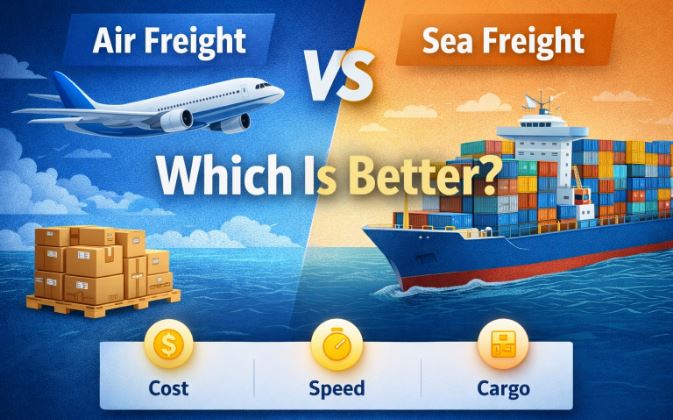
When it comes to moving goods from one country to another, the big question many businesses face is air freight vs sea freight. Both are popular shipping methods, and both have their own strengths and weaknesses. The right choice depends on what you are shipping, how fast you need it, and how much you are willing to spend.
This blog walks you through the differences in a clear, practical way so you can decide what works best for your shipment.
What Is Freight Shipping?
Freight shipping simply means transporting goods in bulk from one place to another. This could be within the same country or across borders. Businesses use freight shipping to move raw materials, finished products, machinery, clothes, electronics, you name it.
The two most common international shipping options are air freight and sea freight. Let’s understand each one clearly.
In simple terms, freight shipping is the backbone of global trade. Almost everything we use in daily life has been shipped as freight at some point, from everyday household items to large industrial equipment. Choosing the right freight method helps businesses manage costs, meet delivery timelines, and keep supply chains running smoothly.
What Is Air Freight?
Air freight means shipping goods using airplanes. These can be cargo-only planes or passenger planes that also carry goods in their cargo space.
Air freight is known for being fast and reliable. If you need something delivered urgently, air freight is usually the first option people think of.
Common items shipped by air freight include:
- Electronics and gadgets
- Medicines and medical equipment
- Fashion items
- Perishable goods
- Important documents
What Is Sea Freight?
Sea freight means transporting goods using ships across oceans and seas. Goods are usually packed into large containers and loaded onto cargo ships.
Sea freight is the most widely used method for international trade because it can carry very large volumes at a lower cost.
Common items shipped by sea freight include:
- Furniture
- Heavy machinery
- Vehicles
- Raw materials
- Large commercial shipments
Air Freight vs Sea Freight: Key Differences
To make things super clear, here’s a simple comparison:
| Factor | Air Freight | Sea Freight |
| Speed | Very fast | Slow but steady |
| Cost | Expensive | Budget-friendly |
| Capacity | Limited | Very high |
| Best for | Urgent, small shipments | Large, heavy shipments |
| Reliability | High | Can be affected by weather/ports |
This table alone answers a lot of questions when thinking about air freight vs sea freight.
Cost Comparison: Air Freight vs Sea Freight
Cost is often the deciding factor.
Air freight is more expensive because:
- Fuel costs are high
- Limited space on planes
- Faster delivery comes at a premium
Sea freight is much cheaper because:
- Ships can carry huge volumes
- Fuel cost per item is lower
- Ideal for bulk shipping
If you are shipping heavy or large items and time is not a big issue, sea freight usually makes more sense.
Speed and Delivery Time
This is where air freight really shines.
- Air freight: Delivery usually takes a few days.
- Sea freight: Delivery can take several weeks.
If your business depends on fast restocking or urgent deliveries, air freight may be worth the extra cost. In the air freight vs sea freight debate, speed is the biggest win for air shipping.
Type of Goods: What Should You Ship?
Choosing between air freight vs sea freight also depends on what you are shipping.
Choose air freight if:
- Goods are urgent
- Items are light and valuable
- Products are perishable
- You need high security
Choose sea freight if:
- Goods are heavy or bulky
- You are shipping in bulk
- Cost matters more than speed
- Delivery time is flexible
There is no “one-size-fits-all” answer, it really depends on your needs.
Environmental Impact
More businesses today care about sustainability.
- Air freight has a higher carbon footprint because planes burn more fuel.
- Sea freight is more eco-friendly per unit of cargo, especially for large shipments.
So, if you are trying to reduce environmental impact, sea freight is often the better option in the air freight vs sea freight discussion.
Which One Should You Choose?
Ask yourself these simple questions:
- How fast do I need the shipment?
- How heavy or large is my cargo?
- What is my budget?
- Is this shipment urgent or planned?
If speed and reliability are top priorities, air freight is the way to go. If cost and volume matter more, sea freight is the smarter choice.
Many businesses actually use both depending on the situation.
Final Takeaway
There is no clear winner in the air freight vs sea freight debate, it all depends on your shipping goals. Understanding the difference helps you make smarter decisions and avoid unnecessary costs.
For businesses looking for smooth, reliable, and well-guided shipping solutions, Lading Logistics can help you choose the right freight option based on your cargo, timeline, and budget.
Whether you are shipping a small urgent consignment or managing large-scale international trade, having the right logistics partner makes a real difference. The right guidance can save time, control costs, and reduce unnecessary delays. With expert support, freight decisions become simpler and more strategic.
FAQs
- Is air freight safer than sea freight?
Air freight is generally considered safer due to shorter transit times and less handling, but both are secure when managed properly. - Which is cheaper: air freight or sea freight?
Sea freight is much cheaper, especially for large or heavy shipments. - Can I ship small packages by sea freight?
Yes, but it may not be cost-effective or time-efficient compared to air freight. - Does weather affect air and sea freight?
Yes. Sea freight is more likely to face delays due to storms and port congestion, while air freight can be delayed by extreme weather. - Can a logistics company help me choose between air freight vs sea freight?
Absolutely. A professional logistics partner can guide you based on your cargo type, budget, and delivery timeline.
Copyright: All rights reserved. Unauthorized reproduction or distribution of any content on this site is prohibited. For permissions, please contact https://ladingcargo.com/