
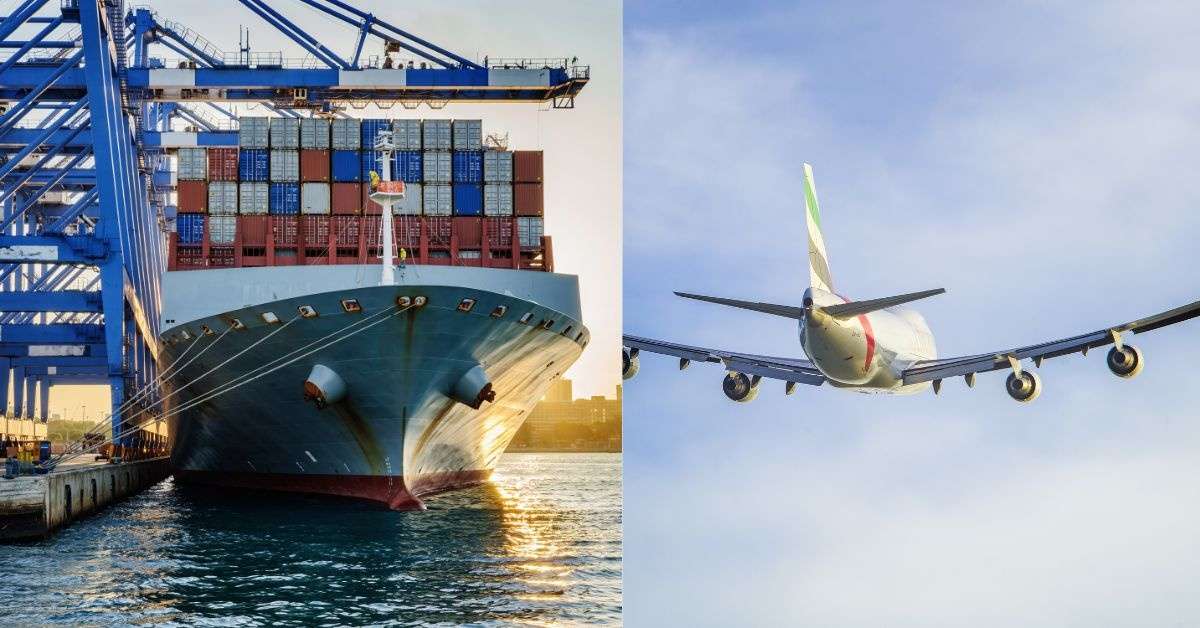
London, April 2026 — The world’s economy is facing its most severe maritime disruption in decades as the Strait of Hormuz, a critical shipping route for global energy, remains effectively blocked. Now in its second month, the standoff between Iran and the United States is causing shockwaves across energy markets, shipping networks, and global supply chains.
The crisis began on 28 February 2026, following Operation Epic Fury, a US-Israeli airstrike that killed Iranian Supreme Leader Ali Khamenei. In retaliation, Iran’s Revolutionary Guard Corps sealed the 21-mile-wide strait with sea mines, drone boats, and missile batteries, halting almost all commercial traffic. The United States responded by imposing a naval blockade on Iranian ports, leaving roughly 2,000 ships and 20,000 sailors stranded in the Persian Gulf.
Energy Markets Hit Hard
The Strait of Hormuz is a major artery for global energy, carrying about 20% of the world’s oil and liquefied natural gas (LNG). Its closure caused oil prices to spike dramatically. Brent crude surpassed $100 per barrel within days and reached $126, while Dubai crude surged to an all-time high of $166.
Attempts to bypass the strait have provided only limited relief. Saudi Arabia has rerouted oil through the East-West Pipeline to the Red Sea, and the UAE is sending crude to Fujairah via the Abu Dhabi Crude Oil Pipeline. Together, these pipelines handle just 9 million barrels per day, less than half the strait’s normal traffic. Major producers, including Kuwait, Qatar, and Iraq, have declared force majeure, cutting output as storage facilities reach capacity.
Shipping Chaos
Global shipping is being severely disrupted. Container lines such as Maersk, Hapag-Lloyd, and MSC are rerouting vessels around Africa’s Cape of Good Hope, adding 10-14 days to Asia-Europe trips. This slows schedules, reduces annual rotations per ship, and tightens global shipping capacity.
Insurance costs have surged. War-risk premiums jumped from 0.1% to as much as 7.5% of a vessel’s value. For a $300 million supertanker, this adds $7-9 million per voyage. Carriers have also introduced emergency surcharges of up to $3,000 per container on Gulf-linked routes.
Ripple Effects Beyond Oil
The crisis is affecting food and industry. The Persian Gulf region produces 30-35% of the world’s urea fertilizers. With spring planting underway in the Northern Hemisphere, crop yields could fall, raising food prices into 2027.
Industrial supply chains are also strained. The U.S. defense sector faces near-total disruption of sulfur supplies, while the high-tech industry struggles with a helium shortage, one-third of which comes from the region. Small businesses worldwide report higher shipping costs and rising fuel prices, reducing consumer spending.
Freight Rates Soar
Shipping costs are climbing sharply. Spot rates from the Far East to the U.S. West Coast have risen 22% in the past month to $2,857 per forty-foot container. Rates to the East Coast are $3,871, up 19%. Even shipments from Europe to the U.S. East Coast jumped 46% despite not passing through the Middle East.
Analysts say carriers are creating new routes, including land bridges through Jeddah and alternative Indian Ocean ports. While European rates have eased slightly, supply chains still rely on costly workarounds.
Diplomatic Stalemate
Efforts to resolve the crisis have stalled. The UN Security Council is divided, with Russia and China blocking resolutions aimed at reopening the strait. Iran now allows ships from “friendly” nations like China and Russia to pass, while reportedly charging tolls exceeding $1 million for others.
Iranian Foreign Minister Abbas Araghchi recently offered to halt attacks on shipping if the U.S. ended its blockade and postponed nuclear negotiations. Whether this will lead to progress is unclear.
For now, analysts warn that disruptions could continue through the rest of 2026. “Until the Strait of Hormuz is safe for free passage, global trade, shipping schedules, and costs will remain under pressure,” said analyst Peter Sand.