
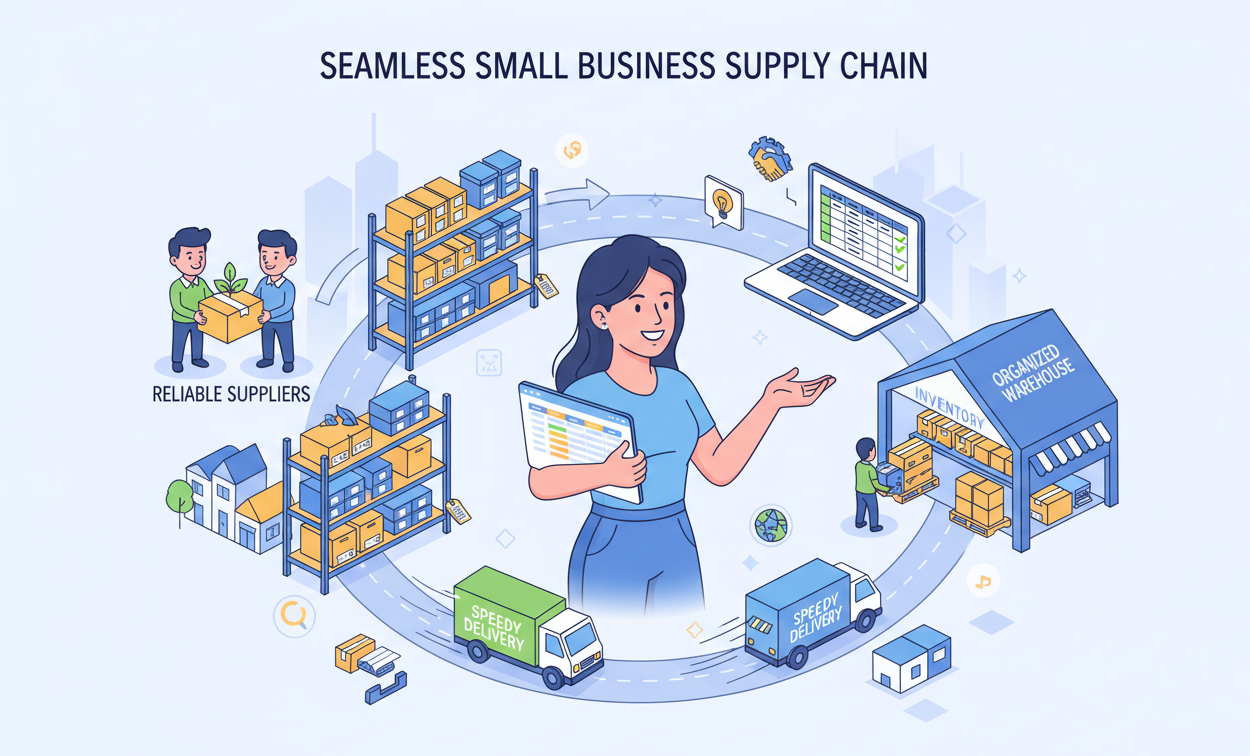
If you run a small or medium business, you already understand how quickly things can go wrong. A supplier delays material, a delivery partner doesn’t show up, or a product you need suddenly goes out of stock. These small problems can stop your entire business for hours or even days. That is why building a dependable supply chain for small business operations is not just helpful, it is essential. A dependable supply chain means you can run your business smoothly, reduce stress, avoid last-minute rush, and keep your customers happy.
The good part? You do not need a huge team or complex systems. With simple habits, smart planning, and better communication, any small or medium business can build a strong supply chain. Let’s dive in.
What Is a Supply Chain in Simple Words?
A supply chain is simply the journey of your product or service. It starts from the moment raw material leaves a supplier and ends when your customer finally receives the finished product. Every person involved in this process is part of your supply chain. This includes suppliers, transporters, warehouse handlers, packers, quality checkers, and delivery partners.
If any one person in this chain makes a mistake or delays, the entire business gets affected. So instead of thinking of it as a complicated system, think of it as a group of people who must work together smoothly. Your job is to make sure every link in this chain is strong enough to support your business.
Why Small and Medium Businesses Need a Dependable Supply Chain
Small and medium businesses work differently from big companies. You may have limited staff, smaller budgets, fewer suppliers, and tighter deadlines. Because of this, even a single delay can disturb your entire week. A dependable supply chain helps you avoid unnecessary stress. It gives you stability, which you can then use to grow your business confidently.
A dependable supply chain helps you:
- Avoid out-of-stock situations
- Reduce last-minute panic buying
- Save money by ordering on time
- Improve customer satisfaction
- Deliver products faster
- Reduce wastage and errors
- Build long-term trust with suppliers and customers
When your supply chain runs smoothly, your business automatically feels lighter and more manageable.

The Main Building Blocks of a Strong Supply Chain
Here are the simple habits and systems that make a supply chain strong and dependable.
First, choose reliable suppliers. Many small business owners pick suppliers based only on the lowest price. But the cheapest supplier is not always the best. If they delay items or provide inconsistent quality, you will end up spending more time and money later. Pick suppliers who are honest, responsive, and consistent.
Second, do not depend on just one supplier. Always have a backup. If your main supplier has a holiday, a shortage, or a sudden issue, your business will not stop. A backup supplier gives you confidence and flexibility.
Third, track your inventory properly. You don’t need expensive software. A simple Google Sheet is enough. Write down how much stock you have, when you need to reorder, and what items are moving fast. Check this sheet often. The goal is to never be surprised by low stock.
Fourth, keep buffer stock for important items. This does not mean storing too much. Just keep a small extra quantity of raw materials or items that take longer to arrive. This saves you during sudden rush or supplier delays.
Fifth, choose good logistics partners. Your delivery partner should match your business speed. Look for partners who deliver on time, share updates clearly, and handle goods carefully. A good logistics partner reduces half of your supply chain stress.
Sixth, create simple processes for your team. Write down small steps for ordering materials, receiving items, storing goods, dispatching items, and handling delays. Even if your team is small, having written steps avoids confusion and miscommunication.
Seventh, communicate openly with your suppliers and partners. Share your expected demand, upcoming seasons, or possible increases in orders. A simple phone call every week can prevent many problems.
Common Mistakes Small Businesses Make
Many supply chain problems are caused by simple mistakes that can be easily fixed. Here are the common ones:
- Depending on one vendor for everything
- Not checking stock regularly
- Ordering materials too late
- No backup plan for suppliers or logistics
- Keeping poor-quality records
- Not reviewing supplier performance
- Using only WhatsApp messages with no written record
- Not training team members properly
Once you fix these small mistakes, your supply chain becomes stronger and your daily operations become much easier.

Simple Tools You Can Use
You don’t need complex or expensive tools to manage your supply chain. Start with these simple ones:
- Google Sheets for inventory tracking
- Google Calendar for reminders and timelines
- WhatsApp Business for communication
- Tally, Vyapar, or any basic billing tool
- Notion or Zoho (optional) for simple record keeping
These tools can improve your supply chain by 50 to 70% with very little effort.
Final Takeaway
A dependable supply chain is not built with big money – it is built with clear communication, simple processes, and smart planning. You don’t need to be perfect. You only need to be consistent. Once your supply chain becomes stable, your business automatically becomes more profitable and less stressful.
And if you ever need smooth, reliable, and hassle-free logistics support, Lading Logistics can make your operations much simpler.
A strong supply chain is built when businesses clearly understand supply chain management vs marketing and how both functions support growth.
FAQs
What is the meaning of supply chain in simple words?
It is the journey of your product from raw material to the customer.
Why do small businesses need a good supply chain?
Because small businesses have limited resources and cannot afford delays or mistakes.
Do I need expensive software to manage my supply chain?
No. Simple tools like Google Sheets are enough to start.
How many suppliers should I have?
At least two – one main supplier and one backup.
What is the biggest mistake to avoid?
Relying completely on one supplier or not tracking inventory properly.