In 2026, the way goods move across the world is changing faster than ever. Trade route changes are happening because of politics, conflicts, new alliances, and economic strategies. Simply put, the map of how products travel from one country to another is not the same as it was five years ago.
For business owners, exporters, and even consumers, understanding these changes is becoming more important than ever.
These shifts don’t just affect big companies; even small businesses and everyday shoppers feel the impact. Shipping times can change, costs may go up, and some products might take longer to reach their destination. Knowing about these trade route changes helps everyone plan better, whether it’s deciding where to source goods from or figuring out the fastest way to get products to customers.
Why Geopolitics Matters for Trade
Geopolitics is all about how countries interact with each other – through diplomacy, military strategies, or economic moves. When countries change how they work together, it can directly affect trade routes. For example:
- Sanctions on a country can block goods from moving freely.
- Trade agreements can open new faster shipping lanes.
- Political instability can make old routes risky.
All these factors mean that companies have to rethink how their products reach customers. A route that was reliable yesterday might be slow or even unsafe today. This is why businesses need to watch global news and updates closely. Understanding these changes helps them avoid unexpected delays. And being prepared can give companies a big advantage over competitors.

Major Shifts in Trade Routes
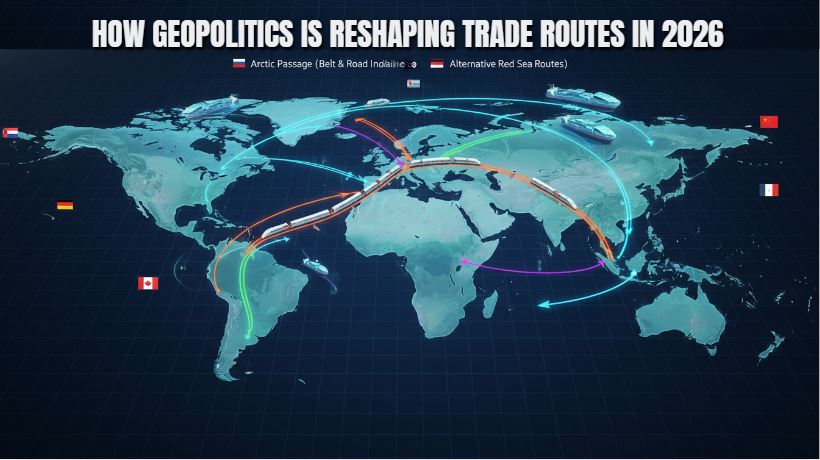
Several trade route changes are catching everyone’s attention in 2026:
- The Arctic Route: Melting ice in the Arctic is opening new sea passages. Ships can now travel from Asia to Europe faster, cutting weeks off traditional routes through the Suez Canal.
- The Belt and Road Effect: China’s infrastructure projects are creating new rail and sea connections in Asia, Africa, and Europe. This is making some old routes less popular.
- Red Sea & Suez Canal Adjustments: Political tensions in the Middle East have made shipping companies consider alternative paths to avoid delays.
- US and Mexico Trade Corridors: Strengthened trade agreements in North America are boosting cross-border trucking and rail.
These changes mean businesses have to constantly monitor which routes are fastest, safest, and most cost-effective.
Companies that stay flexible and update their shipping plans regularly are the ones who gain an advantage. Even small businesses can benefit if they choose the right routes at the right time. In the end, being proactive about these shifts can save both time and money.
Emerging Trade Corridors
New trade corridors are becoming popular because they offer speed and safety:
- Northern Sea Route: Shorter travel between East Asia and Europe.
- Central Asia Rail Networks: Quick rail movement across land instead of risky sea routes.
- West Africa Ports Expansion: Opening new trade options for Europe and the Americas.
Even small businesses benefit when these new corridors reduce shipping costs and delivery times.
These routes also give companies more options if their usual paths face delays or political issues. Businesses can plan shipments more reliably, which helps keep customers happy. Plus, faster deliveries mean less inventory sitting idle, saving both time and money.
Challenges and Opportunities
With every change, there are challenges:
- Higher Costs: Shifting routes might mean higher fees or tariffs.
- Political Risks: Countries can suddenly close routes or impose new rules.
- Environmental Concerns: New routes may affect delicate ecosystems.
But there are opportunities too:
- Faster delivery for exporters.
- Access to new markets.
- More options for logistics planning.
Businesses that adapt quickly are the ones who will benefit most. Paying attention to global trends can help companies avoid surprises.
Using new routes wisely can improve efficiency and reduce overall costs. And being flexible allows businesses to respond faster when unexpected problems arise.
Staying informed also helps companies build stronger relationships with suppliers and customers. Early planning can turn challenges into growth opportunities. Overall, agility and awareness are the keys to thriving in a changing trade landscape.

How Businesses Are Adapting
Companies are doing a few smart things to keep up with trade route changes:
- Using technology to track global political events and route risks.
- Diversifying shipping options instead of relying on one main route.
- Working with logistics partners who understand global shifts.
Even small tweaks, like switching from a delayed sea route to a fast rail line, can save time and money. Many businesses are also keeping extra inventory in strategic locations to avoid delays. Some are negotiating flexible contracts with shipping companies to adjust quickly when routes change.
And others are training their teams to make faster decisions based on real-time information.
Final Takeaway
Geopolitics is constantly reshaping global trade, and 2026 is no exception. Companies that watch trade route changes closely can save money, avoid delays, and grow their markets. For businesses looking for smooth, efficient logistics, working with reliable partners like Lading Logistics can make navigating these changes much easier.
Staying informed and flexible is key. Companies that are quick to adapt to new routes, political shifts, and emerging trade corridors are the ones who stay ahead of the competition.
By planning ahead and choosing the right logistics partners, businesses can turn these changes into opportunities rather than challenges.
Geopolitical changes are influencing logistics decisions, making it important to understand what are the busiest highways in the united states for efficient freight movement.
FAQs
- What does “trade route changes” mean?
It means the paths that goods take between countries are shifting due to politics, economics, or infrastructure changes. - Why are Arctic routes important now?
Melting ice is opening shorter shipping routes between Asia and Europe, saving time and fuel. - How does geopolitics affect shipping?
Political tensions, sanctions, and agreements can make some routes risky or cheaper, directly affecting shipping choices. - Can small businesses benefit from these changes?
Yes! Faster or safer routes can reduce costs and open new markets even for smaller companies. - How do I know which route is safest in 2026?
Businesses usually rely on logistics partners, real-time tracking systems, and global news to make informed decisions.