
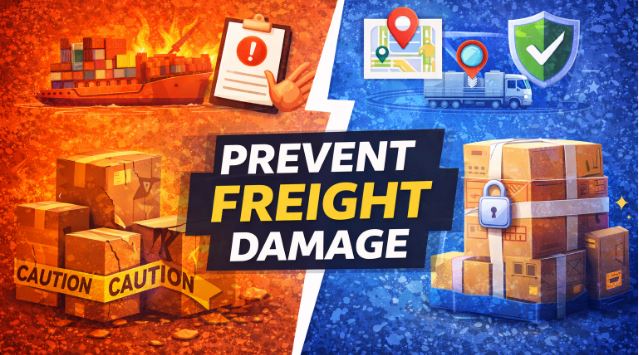
If you ask, “What are the frequent logistics risks for businesses in 2026?”, the answer is freight damage and cargo loss. Longer shipping routes, multiple handovers, stricter regulations, and rising insurance rates all contribute to mishandling, delays, and loss during transit.
For businesses that rely on global logistics, it’s essential to understand how to prevent freight damage. Since it directly helps control costs, build customer trust, and strengthen the supply chain.
Here is a detailed guide on how to protect cargo from its origin to its destination.
What Causes Freight Damage and Loss?
First, it is essential to understand why freight gets damaged so you can prevent it. Most damage is not caused by a single failure, but a chain of small mistakes.
Common causes of freight damage include:
- Inadequate or incorrect packaging
- Improper palletization or weight distribution
- Rough handling during loading and unloading
- Using the wrong container or transport mode
- Extended transit times with multiple transfer points
- Theft, pilferage, or seal tampering
- Incomplete or inaccurate shipping documentation
When businesses identify risks early, they can address problems and prevent cargo from being damaged or lost.
How to Prevent Freight Damage During Packaging
The most crucial phase of protection is packaging. Even the best logistics partner cannot save goods that are poorly packed.
To reduce risk:
- Use packaging materials designed for the cargo type, not generic boxes
- Reinforce corners, edges, and pressure points
- Ensure pallets are stable, evenly weighted, and properly strapped
- Use shock, tilt, and moisture indicators for sensitive cargo
- Clearly label fragile, temperature-sensitive, or hazardous items
Well-designed packaging significantly reduces breakage, compression damage, and vibration-related losses.

Choosing the Right Mode of Transport
When you transport different types of cargo, they also require different modes of transportation. Choosing the wrong mode can increase handling and the risk of damage.
Key considerations include:
- Sea freight increases handling risk but lowers cost for bulk cargo
- Air freight reduces transit time but requires stronger packaging
- Road transport exposes cargo to vibration and loading risks
- Rail offers stability but limited routing flexibility
Selecting transport based on cargo characteristics is a reliable way to keep goods safe over long distances.
Why Handling and Loading Matter
Many damage incidents occur during loading and unloading not during transit.
To minimize handling risks:
- Ensure containers are properly stuffed and blocked
- Avoid overstacking or uneven weight distribution
- Use trained personnel and certified equipment
- Inspect cargo condition at every transfer point
Even mistakes during normal loading of cargo can crush packaging, shift pallets, or damage products inside that may not be visible until delivery.
Technology That Helps Avoid Freight Damage in 2026
Technology now plays a central role in cargo protection. Businesses increasingly rely on digital tools to detect problems early.
Here are the modern solutions:
- IoT sensors that monitor shock, temperature, and humidity
- GPS tracking for route visibility and delay alerts
- AI-based risk analysis to point out high-risk routes or carriers
- Digital condition reports at origin, transfer, and delivery points
These tools help protect freight damage by allowing corrective action before losses become irreversible.
How to Reduce Cargo Theft and Loss
Damage is not the only risk, cargo loss through theft remains a major concern.
Best practices include:
- Tamper-evident seals and high-security locks
- Verified carriers with transparent vessel or vehicle history
- Route planning that avoids high-risk regions and unsecured stops
- Secure storage and controlled access at ports and warehouses
Preventing theft protects both the shipment and your company’s reputation with insurers and partners.
The Role of Documentation and Insurance
In case the damage cannot be fully avoided, proper documentation can help to cover the financial loss.
Critical steps include:
- Accurate packing lists and cargo descriptions
- Clear Incoterms defining responsibility
- Comprehensive cargo insurance, not just carrier liability
- Timely inspection reports and photo evidence
Well-prepared documentation ensures faster claims resolution and reduces disputes.
Common Mistakes That Increase Freight Damage
Many businesses unintentionally increase risk by:
- Choosing the lowest-cost carrier without checking compliance
- Ignoring cargo-specific packaging requirements
- Failing to inspect cargo before shipment
- Assuming insurance will cover all losses
Avoiding these mistakes is often the easiest way to protect goods without increasing costs.
Best Practices Checklist to Protect Your Cargo
- Use cargo-appropriate packaging
- Select the right container and transport mode
- Minimize handling and transfer points
- Monitor shipments with tracking and sensors
- Work with verified logistics partners
- Insure high-value or high-risk cargo
Summary
Although freight damage and loss result in major losses, they can be avoided. Risk can be reduced by implementing measures such as proper packaging, smart transport decisions, careful handling, and modern technology.
In 2026, companies that are able to manage freight loss also protect margins, timelines, and customer trust. Partnering with experts like Lading Cargo can help businesses use best practices and maintain visibility across every stage of the supply chain.
FAQs
What is the most common cause of freight damage?
Freight damage is most commonly caused by improper packaging and handling during loading and unloading.
Can technology really help prevent freight damage?
Yes. Risks can be identified at an early stage and addressed faster with the help of sensors, tracking, and AI tools.
Who is responsible for freight damage?
Freight damage responsibility depends on factors such as Incoterms, contractual agreements, and shipping documentation.
Is cargo insurance necessary?
Yes, cargo insurance is important, especially for long-distance, high-value, or high-risk shipments.
How can businesses reduce freight loss in 2026?
They can reduce freight loss by improving packaging, verifying partners, using real-time monitoring, and maintaining clear documentation.