Many shippers and freight forwarders believe that the freight delays are caused by factors outside of their control. The reasons for freight being delayed can be incorrect or incomplete documentation, regulatory compliance issues, port congestion, weather disruptions. While these challenges really happen, however some of the most frequent and costly delays are entirely preventable.
In today’s trade environment, freight compliance issues are one of the biggest reasons shipments get held, inspected, or rejected. Even small documentation or data errors can stop cargo before it moves, creating delays that impact delivery timelines, customer trust, and overall costs.
Understanding where these mistakes happen and how to prevent them is essential for keeping freight moving smoothly.
Why Compliance Errors Cause So Many Delays
Customs authorities around the world rely heavily on pre-arrival data, automated risk systems, and strict regulatory checks. This means shipments are often assessed before they physically arrive at a port or airport.
If information is incomplete, inconsistent, or inaccurate, authorities may:
- Place the shipment on hold
- Request additional documentation
- Order inspections
- Issue fines or penalties
The result is lost time, higher costs, and frustrated customers.
Key Takeaways
- Many freight delays are caused by documentation and data errors, not transportation issues
- Incorrect HS codes and vague product descriptions are major delay triggers
- Missing licenses or permits can stop shipments at origin or destination
- New regulations like ICS2 require higher accuracy and earlier data submission
- Proactive compliance checks significantly reduce the risk of delays
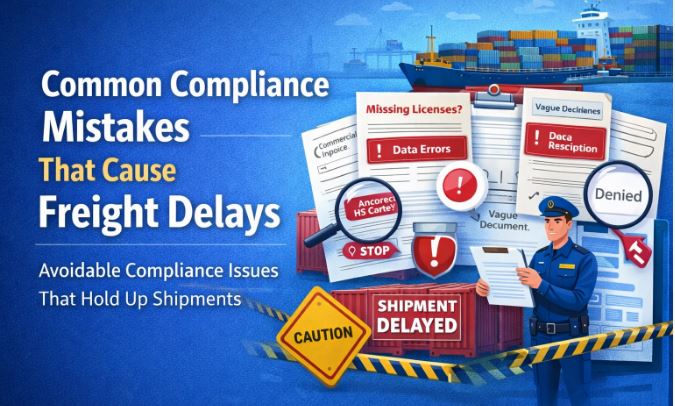
Common Compliance Mistakes That Cause Freight Delays
Understanding these common freight compliance issues can help prevent avoidable delays in freight movement.
Incorrect or Incomplete HS Code Classification
One of the most common compliance mistakes is misclassification of goods.
The Harmonized System (HS) code determines:
- Customs duties and taxes
- Whether licenses or permits are required
- Whether goods are subject to restrictions or controls
When HS codes are incorrect or too generic, customs authorities may flag the shipment for review. This often leads to inspection requests, reclassification, and delayed clearance.
Even when the shipper provides the HS code, freight forwarders and exporters can still be affected if incorrect data is submitted in customs declarations.
Vague or Inaccurate Product Descriptions
Product descriptions like “parts,” “equipment,” “samples,” or “general cargo” are red flags for customs authorities.
Customs officials need clear details to assess risk and compliance, including:
- What the product is
- What it’s made of
- How it’s used
Vague descriptions often trigger:
- Requests for clarification
- Physical inspections
- Documentation reviews
Each request adds time and increases the likelihood of delays.
Missing Export or Import Licenses
Certain goods require special licenses or permits, including:
- Dual-use items
- Pharmaceuticals
- Chemicals
- Electronics
- Controlled or restricted goods
If a required license is missing or submitted late, the shipment may be stopped immediately. In some cases, cargo cannot move until proper authorization is obtained, which can take days or even weeks.
This mistake often happens when shippers assume a product is unrestricted or fail to check destination-country regulations.
Denied Party and Sanctions Screening Failures
Another major cause of freight delays is inadequate screening of parties involved in the transaction.
Customs and enforcement agencies actively monitor:
- Consignees
- End users
- Intermediaries
- Destination countries
If a shipment is linked to a sanctioned, restricted, or high-risk party, it may be blocked or seized, even if all other documents appear correct.
Relying solely on the shipper to conduct screening is risky. When a shipment is stopped, everyone involved in moving the cargo may face scrutiny.
Inconsistent Data Across Shipping Documents
Customs systems compare information across multiple documents, including:
- Commercial invoice
- Packing list
- Air waybill or bill of lading
- Export declarations
Even small inconsistencies such as mismatched weights, quantities, or product descriptions can trigger compliance checks.
Automated systems flag these discrepancies instantly, often leading to:
- Data correction requests
- Clearance delays
- Additional inspections
Consistency across all documents is critical for smooth customs processing.
Temperature-Controlled and Special Cargo Documentation Gaps
For pharmaceuticals, food products, chemicals, and other sensitive cargo, additional documentation is required.
Missing or incomplete records such as temperature monitoring data, stability statements, or special handling declarations can delay release, especially at airports or border checkpoints.
When dry ice or dangerous goods are involved, incorrect declarations can result in shipment rejection or mandatory inspections.
Common Compliance Traps That Lead to Delays
Many delays start with small oversights, such as:
- Accepting vague product descriptions without clarification
- Assuming licenses are not required
- Trusting client-provided data without validation
- Treating compliance as a last-minute paperwork task
While each issue may seem minor, combined they significantly increase the risk of shipment holds.
Moving From Reactive Fixes to Preventive Compliance
Too often, compliance is addressed only after a shipment delayed. A more effective approach is preventive compliance, where risks are identified before booking or departure.
This includes:
- Reviewing product descriptions for clarity
- Validating HS codes
- Checking license requirements early
- Screening parties and destinations
- Ensuring consistency across all documents
Preventive checks save time, reduce costs, and protect supply chain reliability.
How Freight Forwarders and Shippers Can Reduce Delays
You don’t need to overhaul your entire operation to improve compliance. Small process improvements can make a big difference.
Effective steps include:
- Using digital documentation systems to reduce errors
- Standardizing data entry across documents
- Flagging vague or incomplete information early
- Training teams to recognize compliance red flags
- Collaborating closely with customs brokers and logistics partners
Companies that adopt these practices experience fewer delays and faster clearance times.

To Conclude
Freight delays are not always caused by external disruptions. In many cases, they stem from avoidable compliance mistakes made long before the cargo reaches the border.
By understanding common freight compliance issues and addressing them early, businesses can keep shipments moving smoothly, protect their reputation, and deliver on customer expectations.
The future of logistics belongs to companies that treat compliance not as an afterthought, but as a core part of efficient, reliable freight movement.
FAQs
What are the most common freight compliance challenges?
The most common challenges include incorrect HS codes, vague product descriptions, missing licenses, inconsistent documentation, and inadequate party screening.
How do freight compliance challenges cause shipment delays?
When data or documents are incorrect or incomplete, customs authorities may place shipments on hold, request inspections, or demand corrections, which delays clearance.
Who is responsible for freight compliance, the shipper or the forwarder?
Both share responsibility. Shippers provide product information, while freight forwarders are expected to exercise due diligence when submitting documentation.
Can small documentation errors really delay a shipment?
Yes. Even minor inconsistencies in weight, quantity, or product description can trigger automated customs checks and inspections.
How can companies reduce freight delays caused by compliance errors?
By validating HS codes, ensuring clear product descriptions, screening parties, and reviewing documents before shipment, companies can significantly reduce delays.
Copyright: All rights reserved. Unauthorized reproduction or distribution of any content on this site is prohibited. For permissions, please contact https://ladingcargo.com/.